LCD vs OLED vs Mini-LED: Which Display Is Right for Your Business?
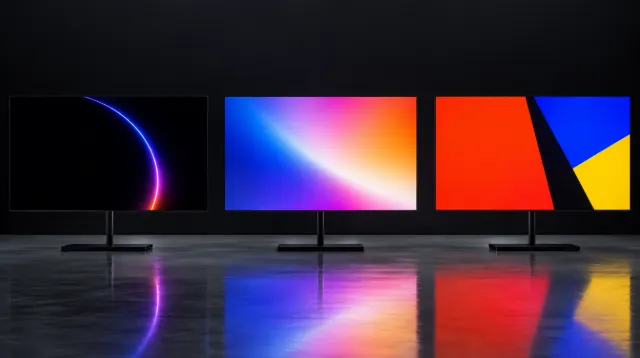
LCD, OLED and Mini-LED compared for business use: brightness, contrast, burn-in risk, lifespan and cost, with picks for signage, offices and retail.

Nits explained for business screens: typical brightness for indoor, window-facing and outdoor displays, heat and sunlight challenges, and energy use.

A screen that looks brilliant in a showroom can look washed out in a sunny shop window. Brightness, measured in nits, is the spec that decides whether people can actually see your content.
One nit is one candela per square metre, a measure of how much light a screen emits. The more ambient light around the screen, the more nits you need.
| Location | Typical brightness range |
|---|---|
| Indoor, away from windows | Around 350–500 nits |
| Bright indoor spaces | Around 500–700 nits |
| Window-facing (indirect sun) | Around 700–1,500 nits |
| Window-facing (direct sun) | Around 2,500 nits or more |
| Outdoor, direct sunlight | Very high brightness, specialist enclosures |
These are typical industry ranges; check manufacturer recommendations for your conditions.
Match brightness to the brightest time of day at your location, and choose commercial displays designed for long hours; see commercial vs consumer TVs. For panel types, see LCD vs OLED vs Mini-LED. For the technology behind brightness, read how LCD screens work.
It will usually be hard to see in daylight and may overheat. Use a high-brightness commercial display.
Not indoors. Too much brightness causes glare and wastes energy.
Many window and outdoor displays include cooling and thermal protection.

Every article is edited by a human and checked against our editorial policy. Spotted a mistake? Tell us.
LCD, OLED and Mini-LED compared for business use: brightness, contrast, burn-in risk, lifespan and cost, with picks for signage, offices and retail.
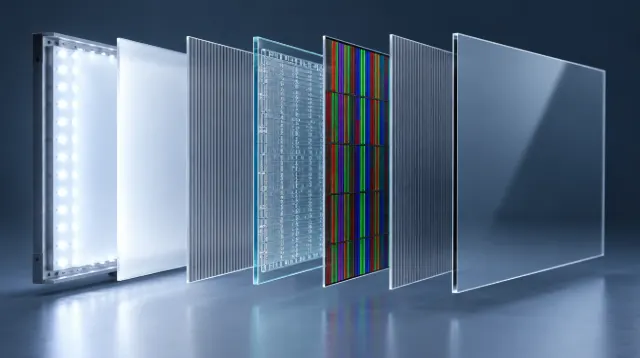
How an LCD screen makes an image, layer by layer: backlight, polarizers, liquid crystals, transistors and color filters, plus TN, IPS and VA panels.
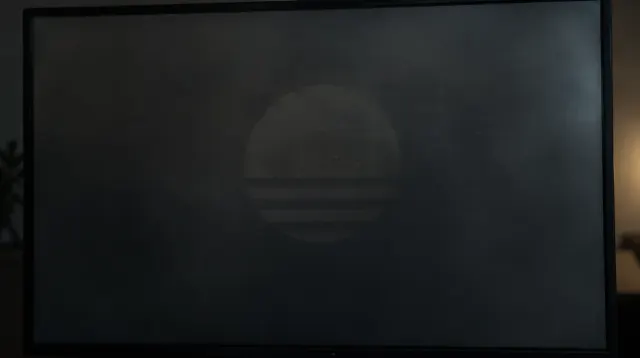
What OLED burn-in is, why static signage content is risky, how burn-in differs from image retention, prevention features and when OLED still makes sense.