LCD vs OLED vs Mini-LED: Which Display Is Right for Your Business?
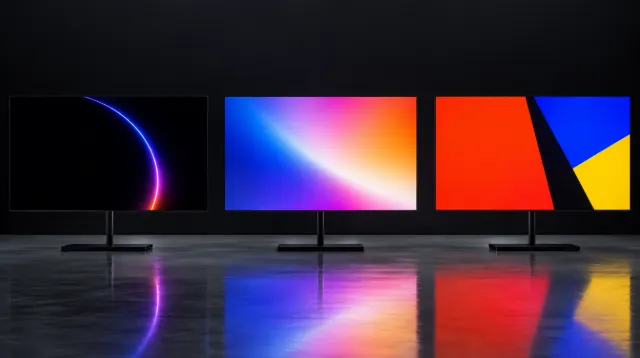
LCD, OLED and Mini-LED compared for business use: brightness, contrast, burn-in risk, lifespan and cost, with picks for signage, offices and retail.

What OLED burn-in is, why static signage content is risky, how burn-in differs from image retention, prevention features and when OLED still makes sense.
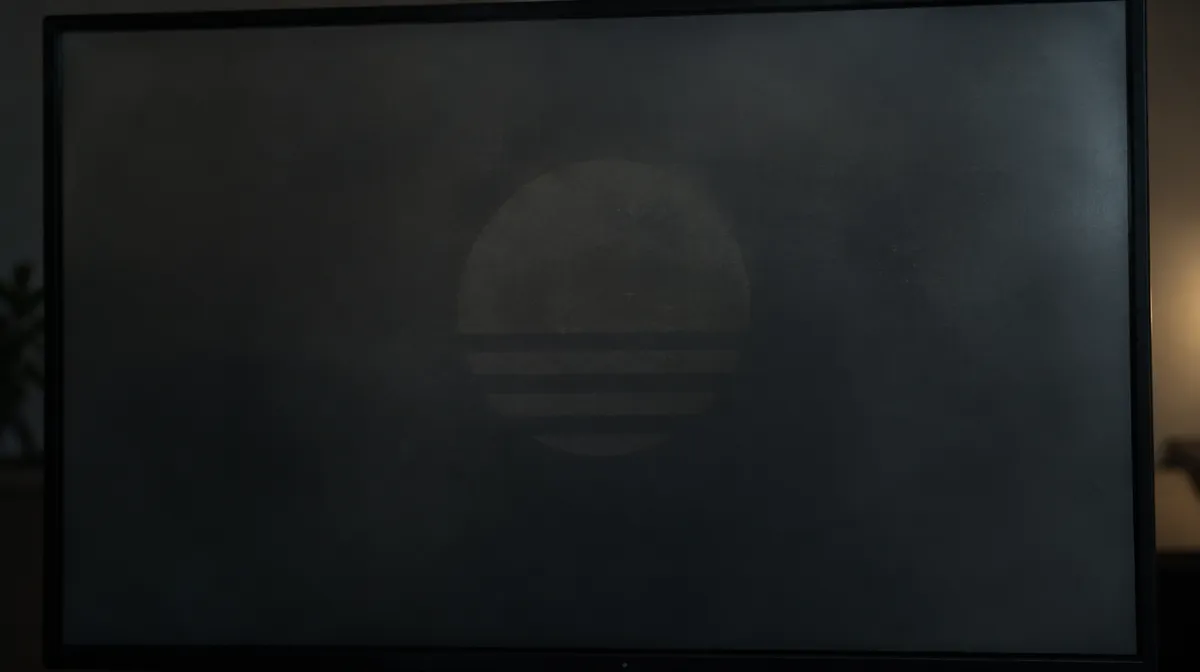
OLED screens look stunning: perfect blacks, rich colour and wide viewing angles. But for business signage, one issue matters above all: burn-in.
OLED pixels produce their own light, and each pixel ages as it’s used. When the same image, such as a logo, price list or ticker, stays in one place for long periods, those pixels wear differently from their neighbours. The result is a permanent faint ghost of the image.
Signage often runs for long hours with static elements: logos in the same corner, menu layouts, dashboards and news tickers. That’s the pattern most likely to cause burn-in.
Many OLED displays include pixel shifting, screen savers, logo dimming and pixel-refresh cycles. These reduce the risk but don’t eliminate it for heavy static use.
For menus, dashboards and long-hours static content, commercial LCD or Mini-LED displays avoid burn-in risk; see LCD vs OLED vs Mini-LED and digital menu boards.
Pixel-refresh features can sometimes reduce mild retention, but true burn-in is usually permanent.
Permanent burn-in is rare on LCDs, though temporary image retention can occur.
It depends on content, brightness and hours. Static content for long periods greatly increases the risk.

Every article is edited by a human and checked against our editorial policy. Spotted a mistake? Tell us.
LCD, OLED and Mini-LED compared for business use: brightness, contrast, burn-in risk, lifespan and cost, with picks for signage, offices and retail.
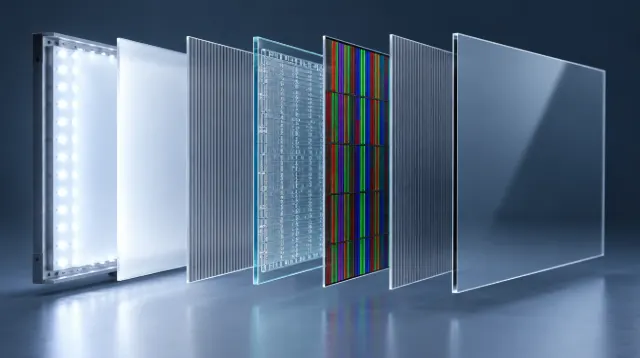
How an LCD screen makes an image, layer by layer: backlight, polarizers, liquid crystals, transistors and color filters, plus TN, IPS and VA panels.
Nits explained for business screens: typical brightness for indoor, window-facing and outdoor displays, heat and sunlight challenges, and energy use.